

Clinical nursing
Palliative care support at home
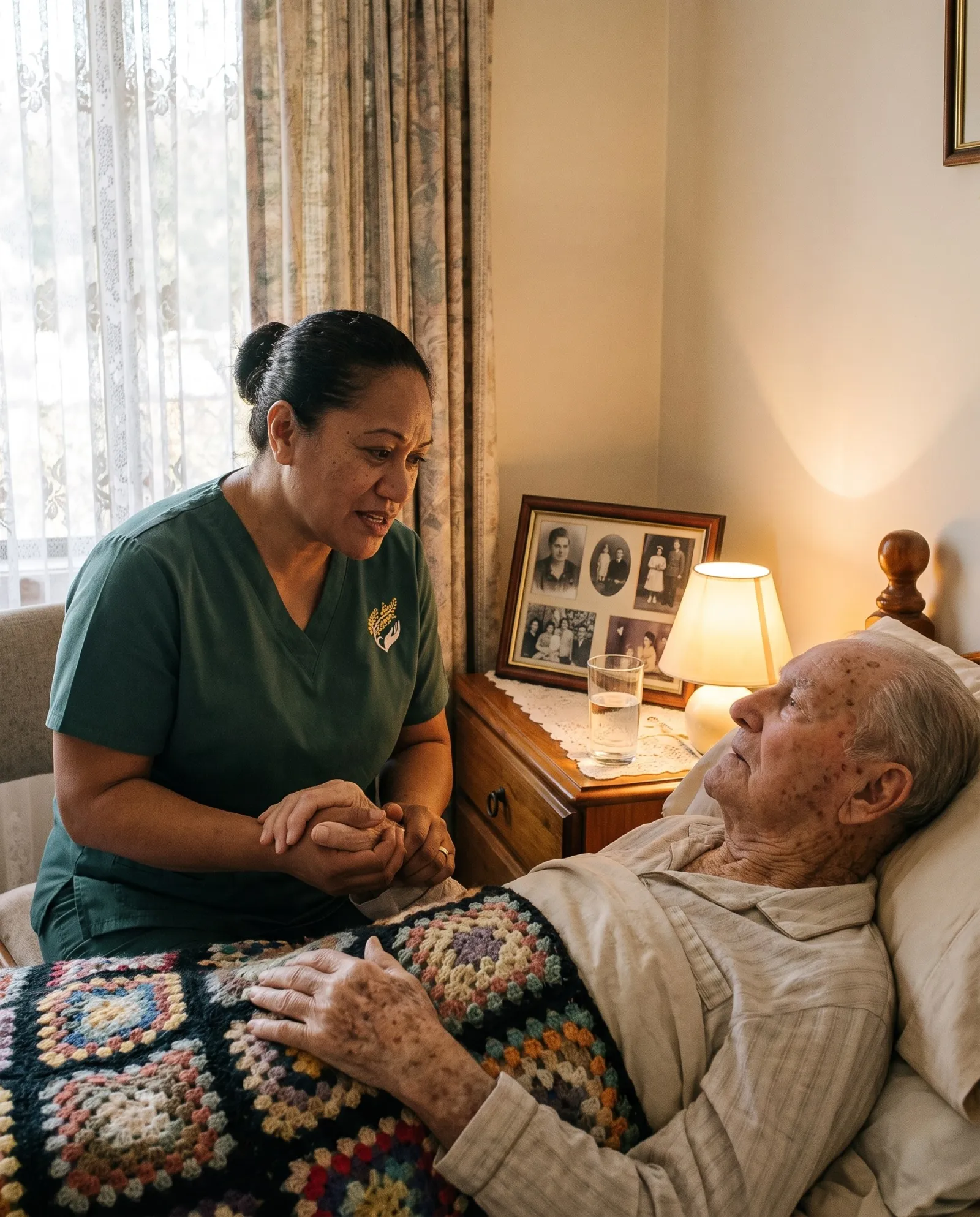
When care turns to comfort, the nursing changes. It becomes slower, quieter and much more about the family in the room.
What this involves
- Pain and symptom monitoring against the palliative plan
- Syringe driver monitoring and site care
- Pressure area care and repositioning for comfort
- Mouth care, hydration and personal comfort measures
- Support and preparation for family members
- Close liaison with your palliative care team and GP
When people ask us for this
- A palliative team is involved and extra visits are needed at home
- Someone wishes to remain at home rather than return to hospital
- Symptoms need monitoring between specialist visits
- The family needs practical support and honest information
- A carer needs respite to keep going
Worth knowing
We are not a 24-hour service. Your palliative care team's after-hours number remains the right call overnight, and 000 in an emergency.
How we approach it
We work alongside your palliative care service rather than in place of it. They direct the clinical plan; we provide the hands and the hours at home that make staying there possible.
Visits are not rushed. A palliative visit that is scheduled for an hour takes an hour, because a great deal of what matters at this stage happens in conversation rather than in tasks.
Families are part of the care, not bystanders to it. We explain what is happening and what is likely to happen next, because being told plainly is almost always easier than being managed around.
How this is usually funded
The nursing is the same whichever pathway pays for it.
- DVA community nursing, for eligible veterans, war widows and widowers, with a GP referral
- Government-funded aged care support at home
- Private arrangements, with transparent hourly rates and no waiting list
- Short-term packages after a hospital discharge
Other nursing services
Ready to arrange care for someone you love?
Call for a friendly chat, or send a referral and we will be in touch within one business day.