


Clinical nursing
Catheter care and changes
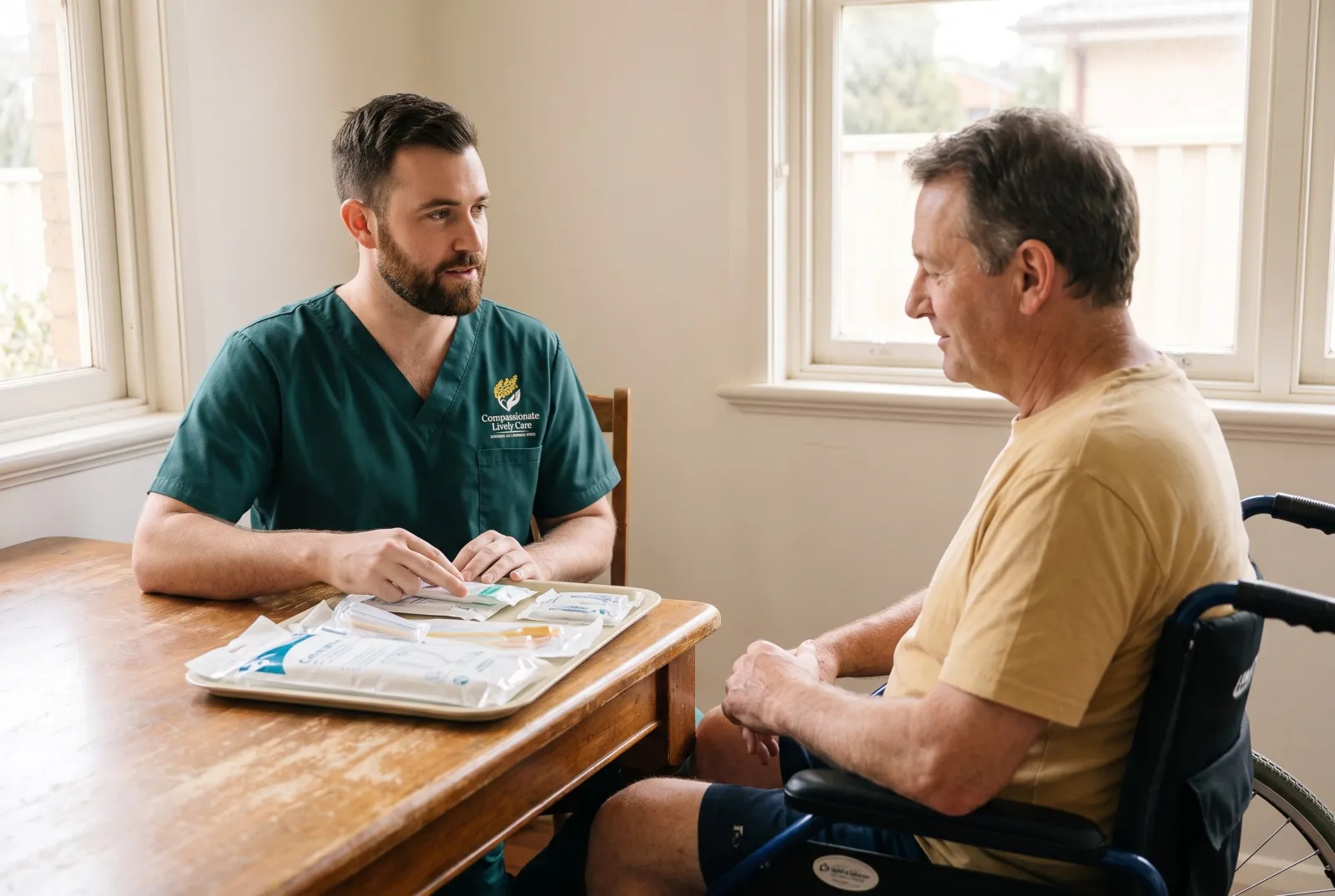
Catheter care is routine for us and rarely feels routine for the person receiving it. We work discreetly, calmly and to schedule.
What this involves
- Indwelling urinary catheter insertion and change
- Suprapubic catheter change and site care
- Leg bag and night bag management
- Bladder washouts and flushing where prescribed
- Blockage and bypassing troubleshooting
- Education on daily care between visits
When people ask us for this
- A long-term catheter needs changing on schedule
- Recurrent blockages or bypassing
- After a urological procedure or hospital discharge
- Reduced mobility makes clinic visits difficult
- A family carer needs training and backup
Worth knowing
Call us the same day if there is no urine draining for several hours, if urine turns cloudy and strong-smelling, or if there is new fever, back pain or blood.
How we approach it
Long-term catheters need changing on a schedule rather than when something goes wrong. Keeping to that schedule is the single most effective way to reduce blockages, bypassing and infections, so we book the next change before we leave.
Between visits, most problems are manageable at home once someone has shown you what to watch for. We cover positioning, bag hygiene, fluid intake and the specific signs that mean call us rather than wait.
Catheter care is also a dignity issue. We screen, we explain what we are doing before we do it, and we do not treat it as a task to get through quickly.
How this is usually funded
The nursing is the same whichever pathway pays for it.
- DVA community nursing, for eligible veterans, war widows and widowers, with a GP referral
- Government-funded aged care support at home
- Private arrangements, with transparent hourly rates and no waiting list
- Short-term packages after a hospital discharge
Other nursing services
Ready to arrange care for someone you love?
Call for a friendly chat, or send a referral and we will be in touch within one business day.