
Clinical nursing
Complex wound care at home
Wounds heal on their own schedule, not the calendar's. Our nurses assess, dress and review at the interval the wound actually needs.
What this involves
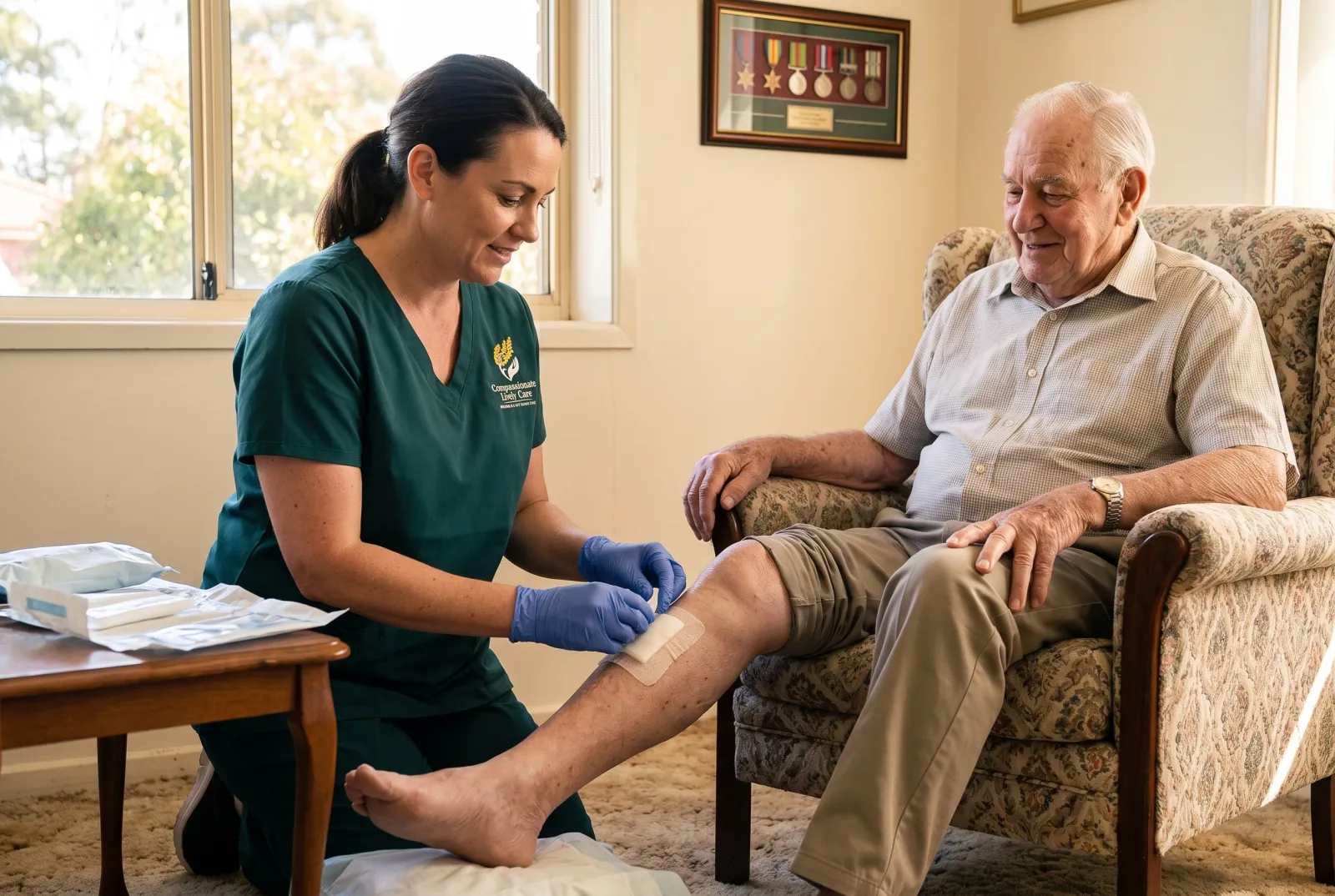
- Full wound assessment with measurement and photography
- Dressing selection and regular changes
- Pressure injury prevention and repositioning advice
- Compression bandaging for venous ulcers
- Wound swabs and escalation when infection is suspected
- Liaison with your GP, surgeon or wound clinic
When people ask us for this
- After surgery, when the wound needs monitoring at home
- Pressure injuries from reduced mobility or a hospital stay
- Venous, arterial or diabetic leg ulcers
- Skin tears, which are common on thin or ageing skin
- A wound that has stopped improving on its own
Worth knowing
If a wound becomes hot, spreading, foul-smelling or suddenly more painful, call us or your GP the same day. Those are infection signs and they should not wait for the next scheduled visit.
How we approach it
Every wound starts with a proper assessment: size, depth, tissue type, exudate and the surrounding skin. That assessment is written down and repeated, so progress is measured rather than guessed at. If a wound is not improving on the expected trajectory, we say so and involve your GP or a wound specialist.
Dressing choice matters more than most people expect. The right product at the right interval can be the difference between a wound closing in weeks and one that lingers for months. We carry and select appropriately rather than applying whatever is in the cupboard.
We also treat the cause, not just the wound. That means talking about pressure relief, footwear, nutrition and mobility, because a dressing alone rarely fixes a wound that keeps being re-injured.
How this is usually funded
The nursing is the same whichever pathway pays for it.
- DVA community nursing, for eligible veterans, war widows and widowers, with a GP referral
- Government-funded aged care support at home
- Private arrangements, with transparent hourly rates and no waiting list
- Short-term packages after a hospital discharge
Other nursing services
Ready to arrange care for someone you love?
Call for a friendly chat, or send a referral and we will be in touch within one business day.