
Clinical nursing
Medication administration and management
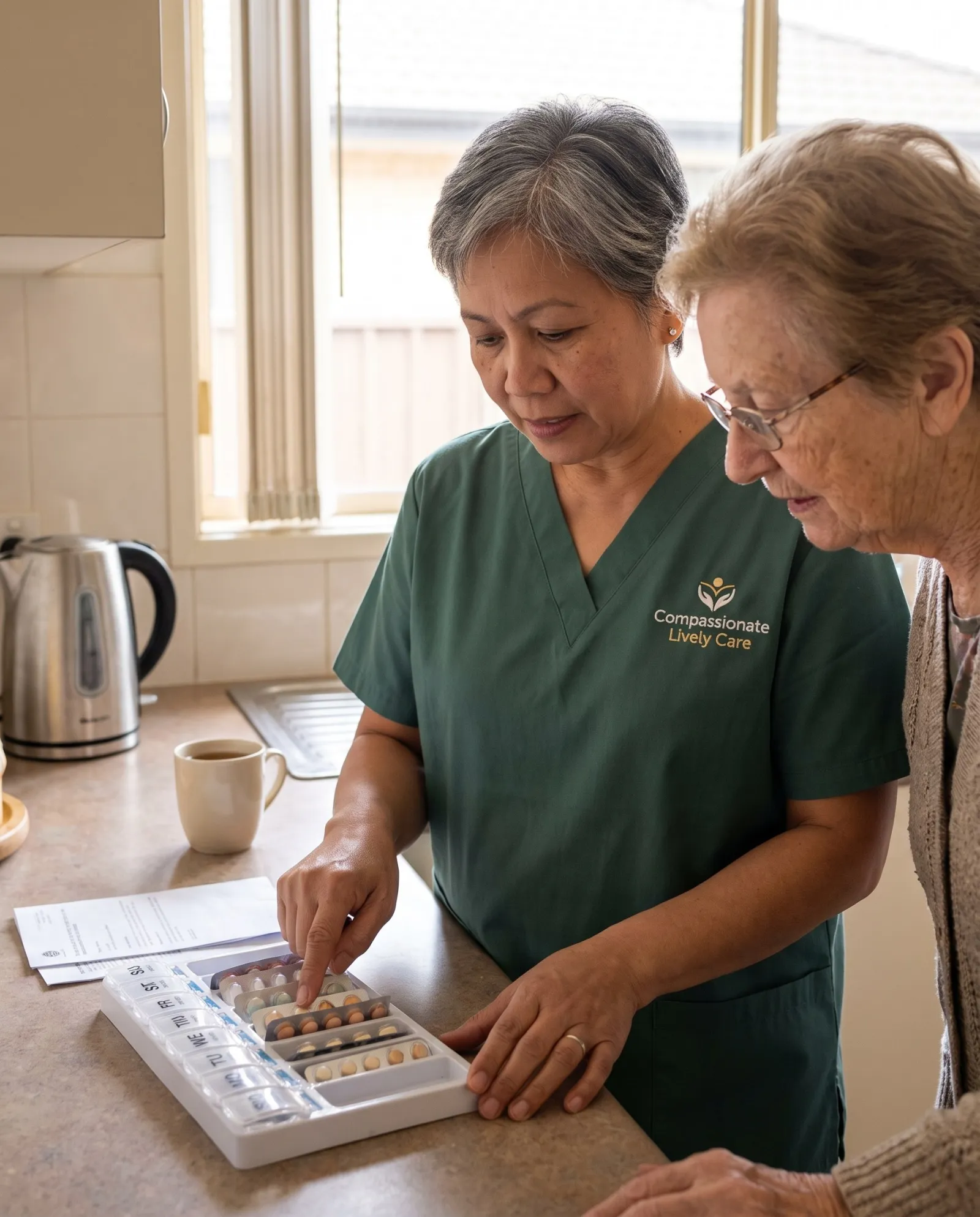
Medication is where small errors do the most damage. Our nurses administer, document and monitor so nothing is missed or doubled.
What this involves
- Administration from webster or blister packs
- Subcutaneous and intramuscular injections
- Insulin administration with blood glucose monitoring
- Eye drops, patches, inhalers and topical preparations
- Medication reconciliation after a hospital discharge
- Education so family members understand the regimen
When people ask us for this
- A regimen has become too complex to manage alone
- Memory changes make missed or doubled doses likely
- An injection is required that a family member cannot give
- Medications changed during a recent hospital stay
- Someone is managing but the family wants oversight
How we approach it
The most common problem we find is not a refusal to take medication. It is a regimen that has quietly grown past what anyone could reasonably keep track of, often after several specialists have each added something.
Our nurses administer to the current chart, document every dose, and flag discrepancies to your GP or pharmacist. After a hospital discharge we reconcile what was sent home against what was being taken before, which is where most avoidable errors hide.
Where a family member wants to take over some of it, we teach rather than gatekeep. Plenty of households manage their own medications well with a nurse checking in weekly instead of daily.
How this is usually funded
The nursing is the same whichever pathway pays for it.
- DVA community nursing, for eligible veterans, war widows and widowers, with a GP referral
- Government-funded aged care support at home
- Private arrangements, with transparent hourly rates and no waiting list
- Short-term packages after a hospital discharge
Other nursing services
Ready to arrange care for someone you love?
Call for a friendly chat, or send a referral and we will be in touch within one business day.