

Clinical nursing
Diabetes care and monitoring
Diabetes is managed in the details: timing, technique, feet and consistency. All of it is easier with a nurse involved.
What this involves
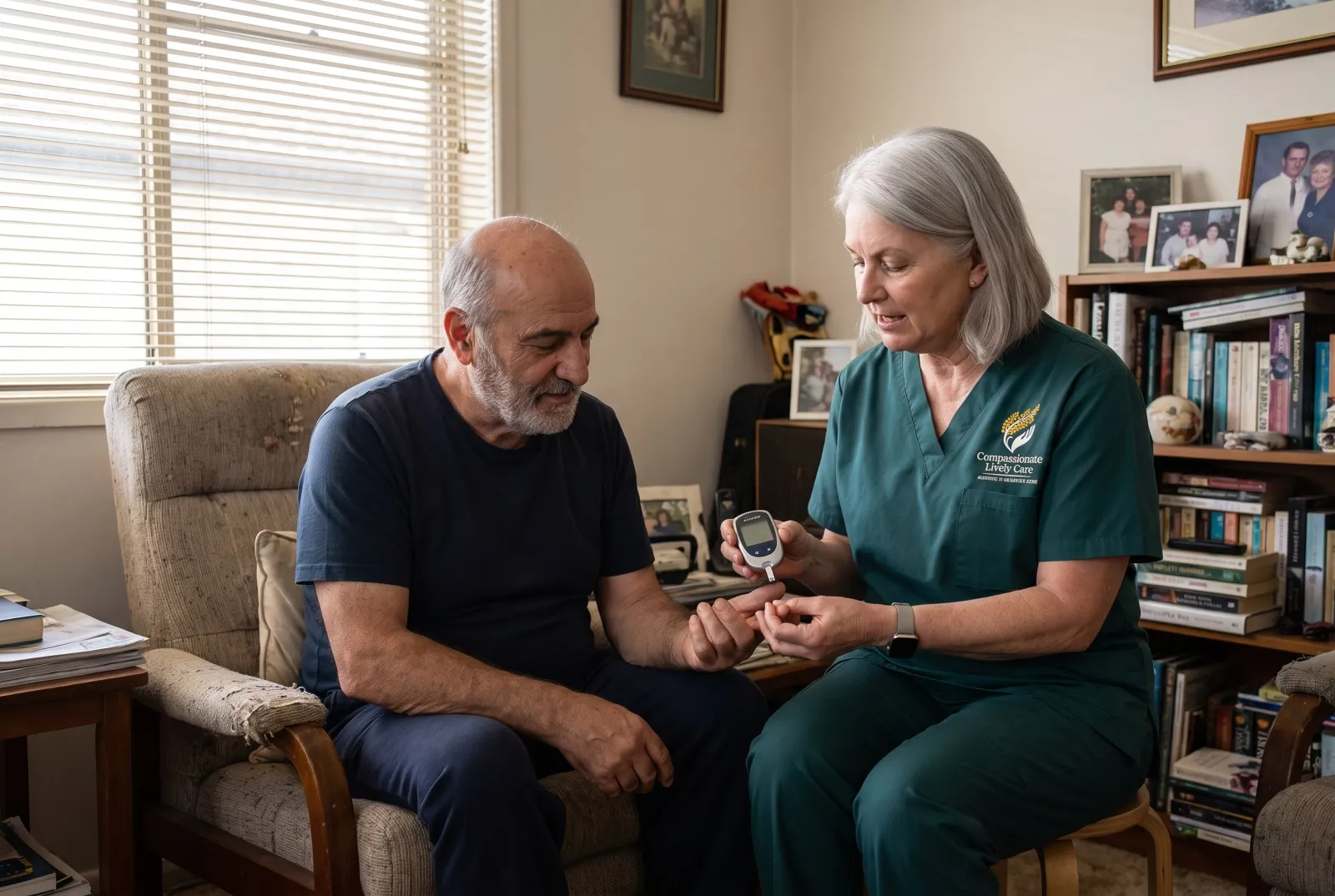
- Insulin administration and dose support
- Blood glucose monitoring and pattern review
- Injection site rotation and technique correction
- Diabetic foot inspection and ulcer prevention
- Hypoglycaemia recognition and response planning
- Practical education for the person and their family
When people ask us for this
- Insulin has been started and confidence is not there yet
- Blood glucose readings have become erratic
- Eyesight or dexterity makes self-injection unsafe
- There is a foot ulcer, or a history of one
- Diabetes and another condition are interacting badly
Worth knowing
Any new area of redness, blistering, numbness or breakdown on the foot should be looked at within 24 hours, not at the next routine visit.
How we approach it
A surprising share of erratic readings come down to technique rather than the condition: sites that have not been rotated and have hardened, insulin taken out of sync with meals, or a pen that is not being primed. Those are quick to correct once someone watches the routine.
Feet get specific attention. Diabetic foot ulcers are among the most preventable serious complications we see, and a two-minute inspection at each visit is what prevents them.
We work to your GP's or endocrinologist's plan and report back to them. We do not adjust insulin doses independently.
How this is usually funded
The nursing is the same whichever pathway pays for it.
- DVA community nursing, for eligible veterans, war widows and widowers, with a GP referral
- Government-funded aged care support at home
- Private arrangements, with transparent hourly rates and no waiting list
- Short-term packages after a hospital discharge
Other nursing services
Ready to arrange care for someone you love?
Call for a friendly chat, or send a referral and we will be in touch within one business day.